Saturday, December 26, 2020
TAMING OF THE SHREW – REVIEW OF STREAMING OF 1988 STRATFORD FESTIVAL PRODUCTION
Reviewed by James Karas


Friday, December 18, 2020
MADAMA BUTTERFLY – REVIEW OF GREEK NATIONAL OPERA PRODUCTION
By James Karas
This is a review of Madama Butterfly produced by the Greek
National Opera and streamed around the world.
No, that is not a misprint. There is a Greek National Opera (GNO) that is alive and kicking. It has a stunning new home in the Stavros Niarchos Foundation Cultural Centre in Athens, and it is has produced and telecast a redoubtable production of Madama Butterfly. More about Greek opera later.
Performances of Madama Butterfly started in October and a recording was made in November just before all events were cancelled due to Covid-19. To their great credit they have decided to stream the recorded performance and remind us of the existence of the Greek National Opera.
 |
| Gianluca Terranova and Ermonela Jaho in GNO's Madama Butterfly |
The production features Albanian Soprano Ermonela Jaho as Cio-Cio San (Madama Butterfly), the 15-year-old Japanese geisha who falls hopelessly in love with Lieut. Pinkerton of the United States Navy. She delivers a splendid Cio-Cio San. Not only does she sing with sterling vocal beauty but invests the role with emotional depth that is exhilarating and heart-breaking. We see the happy bride who is in love and will do anything to please her lover. In “Un bel di vedremo” she imagines Pinkerton’s return after having been abandoned three years before. There is longing, playfulness, beautifully imagined happiness, all done superbly by Jaho.
The tragic end is yet to come when she realizes the extent of Pinkerton’s perfidy and she has to give up her son and then her life. A performance full of vocal beauty and pathos.
Italian tenor Gianluca Terranova played Pinkerton as an arrogant,
self-centered, amoral, “ugly American” who “marries” a young girl to satisfy
his lust. Butterfly is a temporary wife, and he can get rid of her on a month’s
notice when he has a real wedding with an American girl. Terranova is fine as a
swaggering scoundrel and his voice soars to the high notes of his braggadocio.
Director Hugo de Ana has him dressed all too casually in an open shirt and
slacks. It does not quite befit a lieutenant in the U.S. Navy who is most
likely to wear a dress uniform.
Baritone Dionysios Sourbis as the American Consul Sharpless appears more nervous than sympathetic at the start, but he eventually sings and acts like a mensch when the extent of Butterfly’s tragedy strikes him in the face.
Mezzo-soprano Chrysanthi Spitadi deserves kudos for her performance as
Butterfly’s faithful servant Suzuki. She sees and knows the truth and tries to
help the besotted Butterfly. A completely sympathetic character done well by Spitadi.
Hugo de Ana gives us a classic, conservative production that has many fine details. For example, Butterfly has an icon, a rosary and wears blue jeans. She has renounced her entire cultural background to become an American wife and please Pinkerton. The final scene is done with deep pathos with Butterfly’s suicide handled with effectiveness and restraint.
De Ana goes overboard with some of his costumes for Butterfly’s visitors. Yamadori (Marios Sarntidis) and Bonzo (Yianni Yannisis) don huge, ridiculous wigs. The rest are mostly tasteful and there are some beautiful Japanese costumes.
The set is fairly Spartan but appropriate with skeletons of structures and backdrops indicating the port and appropriate lighting. There is judicious use of video projections especially during the interminable intermezzo.
Lukas Karytinos conducted the Orchestra of the GNO. Because of Covid-19,
the size of the orchestra was reduced but it still sounded excellent. Unfortunately,
there seems to be a problem with the hall’s acoustics. While the orchestra
sounded fine, there was a difference in volume coming from the stage. The
singers were never overwhelmed but there were times when it was difficult to hear
them. When the main characters sang at full throttle, there was no issue. At
other times there was.
Giorgos Koumendakis, the GNO’s Artistic Director, advises that more productions will be televised starting January 2021. That is an incredible step forward for Greek culture.
The Greek National Opera was formed in 1939 and it had its first
production on October 25, 1940. In attendance were numerous notables including
the Italian Ambassador to Greece, Emanuele Grazzi. He is the one that three
days later, in the middle on the night of October 28, 1940 visited Dictator
Ioannis Metaxas and delivered Italy’s ultimatum. By the morning, Greece had
entered World War II. This production of Madama Butterfly marks
the 80th anniversary of the 1940 opening.
There have been many productions since 1940 but very few have merited international attention. A young girl named Mary Kalogeropoulos sang on its stage during the war. She left Greece and went to Italy and became Maria Callas. There are many world-class singers and musicians, and all should be brought to Athens to make the world notice the GNO.
The GNO already has a large roster of in-house singers, dancers, musicians and behind-the-scenes personnel. It promises to telecast more productions to the world. We wait with anticipation and hope. ______________
Madama Butterfly by Giacomo
Puccini is being streamed by the Greek National Opera. For more information go
to: https://www.nationalopera.gr/ or https://tv.nationalopera.gr/
Monday, December 14, 2020
TOSCA – 1978 MET PRODUCTION STREAMING AND MUCH MORE
Reviewed by James Karas
Have you heard or seen Tosca
recently? How many times? Have you heard Maria Callas in her 1953 recording?
New York’s Metropolitan Opera offered us another chance to see Tosca by streaming its 1978 production. It is part of its daily streaming of productions new and old during the pandemic. It is a redoubtable show by any standard, but you may wish to complain about the pre-digital age video. You should not.
Tosca requires three topnotch singers: a soprano, a tenor and a baritone. With some exaggeration one can state that almost every topnotch soprano, tenor and baritone has recorded Tosca, many more than once, but more about that later.
 |
| Maria Callas |
The production streamed for us featured Shirley Verrett as Tosca, Luciano Pavarotti as Cavaradossi and Cornell MacNeil as Scarpia. That is star power. Verrett started as a mezzo but had the high notes to sing soprano roles and she does a stunning Tosca. She has a richly toned voice and dramatic talent, and her Tosca has grand emotional depth and strength. She is coy and jealous in the beginning but progresses into a woman who is deeply in love in the duet with Cavaradossi. Her “Vissi d’arte” is almost a prayer and we relish her murder of Scarpia as she glorifies in her stabbing and cries “Muori donato! Muori, Muori!”
Luciano Pavarotti, who dominated the tenor repertoire, made his Met debut in the role of the heroic Cavaradossi. He sings with ease and assurance and his splendid middle range is a delight while the high notes seem to come effortlessly. Much younger then, he is physically adroit and gives us a memorable Cavaradossi.
Cornell MacNeil was one of the foremost baritones of the era and interestingly was directed by another outstanding Scarpia – Tito Gobbi. Gobbi sang Scarpia in perhaps the greatest recording of Tosca, the one with Maria Callas in 1953. MacNeil as Scarpia is made to look like Gobbi did in the role especially in the 1964 production at Covent Garden. That production, with Maria Callas of course, was directed by Franco Zeffirelli part of it is available on YouTube.
Gobbi’s adept production is Zeffirellian in its approach. He wants us to see details of the church in the first act and the room in the Palazzo Farnese in the second act as well as a giving us a good impression of the Castel Sant’ Angelo in the third act.
Zeffirelli produced his version of Tosca at the Met in 1985 and it was revived numerous times for the next 25 years. It starred Hildegard Behrens, Placido Domingo and Cornell MacNeill. It is lavish, opulent, stunning, vocally and physically. Enough said. Just see it.
Zeffirelli’s unforgettable production was replaced by Luc Bondy’s staging in 2009 and it was roundly booed. In 2017 Bondy’s production was replaced by one directed by David McVicar. The latter avoided Bondy’s pitfalls and gave a traditional production laden with many fine details that made it look fresh. It was a success.
Opera listeners come in several categories. Normal people who see and listen to standard repertory productions. They come in various gradations of dedication to the art. In the other extreme are the opera buffs or aficionados. There dedication has no bounds – they are nuts – who want every recording of their favourite opera or singer and argue about her high notes, his wobbly low notes and everything in between.
If you see one production of, say, Tosca, you want to see a couple more, no? Yes. But which one do you choose? In 1978, a critic reviewed recordings of Tosca and listed a mere 24 complete recordings starting in 1920. That is a pittance, and most aficionados would have had no difficulty acquiring most of them. Digital recordings, videos and streaming arrive, and the number of recordings goes through the roof. It seems that there are more than 250 recordings of Tosca today. Trying hearing, seeing or buying most of them!
But mention Tosca and all afficionados will immediately point to the 1953 Callas, Gobbi and Giuseppe di Stefano recording. It is spectacular in every aspect and listening to the enhanced CD has the advantage of letting you imagine the action. As I said almost every soprano has recorded Tosca and you will not go wrong with Leontyne Price, Renata Tebaldi, Montserrat Caballe and many others. But like a Muslim going to Mecca, you cannot go though life by not hearing that recording.
There is no shortage of Tosca recordings available on DVDs and on YouTube. In 1976 Gianfranco de Bosio made a notable film with Raina Kabaivanska, Placido Domingo and Sherril Milnes in the main roles. It has the advantages of a movie without interfering with the music or the libretto We see the exteriors and interior of Sant’ Andrea Della Valle Church, get a view of the Palazzo Farnese as well as the Castel Sant’ Angelo. The great scenes are a bonus to the stunning performances of the young singers. A couple of hours well spent.
But things do not always work out. If you want to see the “big names” together in a production that stinks, see Tosca in the 2000 production at the Teatro dell’ Opera di Roma. The stage looks like something you find in a high school auditorium. It has no real orchestra pit and the musicians are encroaching on the playing area which is tiny. The set is pathetic, what you can see of it when the camera is not relentlessly zeroing in on the faces of the singers.
Covid-19 is making life hell but a few hours with Tosca, Maria Callas and a few others like her and life will seem a lot better.
____________________________
James Karas is the Senior Editor - Culture of The Greek Press. This review appeared first in the newspaper
Thursday, December 3, 2020
A FOREIGN COUNTRY – REVIEW OF NOVEL ABOUT GREEK IMMIGRANTS IN CANADA
A
FOREIGN COUNTRY
by Fotios Sarris
Dumagrad Books,
Toronto
416 pages,
$19.95
ISBN
978-1-988887-05-0.
Reviewed by James Karas
There are several hundred thousand Canadians of Greek descent in Canada made up mostly of those who were born in Greece and came to Canada after World War II and their offspring. One source states that there were 300 Greeks in Canada in 1900 and that there are about 350,000 of us today.
They have done well but a shelf that I have tried to fill with books
written by them in Canada is relatively small. Wikipedia lists only four
Greek-Canadian Authors. They are Pan Bouyoucas, Tess Fragoulis, Thomas King and
Dimitrios Roussopoulos. There are many more. Tess Fragoulis, in her Musings:
An Anthology of Greek-Canadian Literature, includes samples of the
writing of a dozen authors. There are others that I may not have heard of to my
great shame.
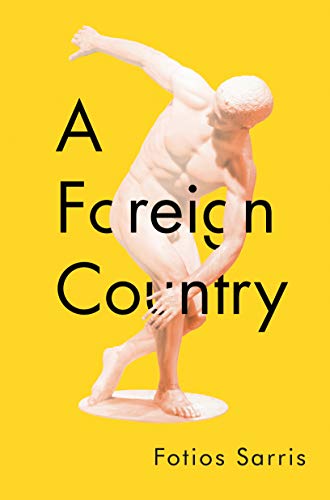
But the novel tells much more than the story of one family. It tells the history of an entire community of Greeks and by extension the story of Greeks from Pythagoras to the present. It is a story and a world that most immigrants and their children will recognize because to a startling extent it represents their personal experiences. It feels like you are reading your biography.
Andreas Doukas emigrates from a village near Thessaloniki, Greece in the 1950’s and starts working in a restaurant. A friend suggests that he marry his sister who works as a maid in Greece. She comes to Canada, they marry and have a son, Alex or Alexander.
Andreas and his wife are ill-suited for each other and there is a huge gap between father(s) and son(s). What is true of Mr. and Mrs. Doukas and their son holds true for a huge number of immigrants and their children. The fathers want to retain their Greekness as they brought it with them. Their children speak Greek badly and there is a chasm between the two generations much bigger, it seems, than that experienced by the Anglos who raise their offspring. Appearances may be deceiving.
Alex’s father runs a pool hall with fellow immigrants as his customers. The father wants to keep the old: the son wants to bring in the new. The fathers want to fight and argue about the politics of Greece; the sons are not interested in them. The fathers keep the Greek flag and the star of Vergina, the eternal Macedonian issue. They are furious at Canada’s recognition of the Republic of Macedonia under its constitutional name. The sons do not care about the issue and want to move forward.
The novel is a biography of every Greek immigrant to Canada. The unifying themes of the German occupation, especially the famine, the Civil War and all the traditions and rituals of patriotism, religion and history are embedded in everyone’s soul. But that does not hold true for their children. More often than not they consider themselves Canadian.
The patriotism of Andreas and his friends knows no bounds. When Greeks invented civilization the rest of humanity was in the trees. The common patriotic thread runs from time immemorial – Pythagoras, Socrates, Plato - to the present.
Alex is named Alexander after his grandfather but also after Alexander the Great. He is a Canadian and cannot quite fathom the patriotism of his father’s generation. It is another running thread that almost every child of immigrants can relate to.
It is that shock of recognition that made a big impression on me. It is what we say depends on our age. That is the biography of all of us that Sarris gives us.
Sarris has a marvelous comic sense and the section about child rearing is hilarious. The facts of life are simple. People get married and a child starts growing in the mother’s stomach. When the time comes, she is cut open with a knife and the baby comes out. His mother told him that her stomach was cut open and he was born. Alex is sure of that and nothing will dissuade him.
His friend tells him that girls do not have penises; they have holes. The mother has an egg in there, and the father covers it with cream and the baby is created. It comes out of the mother’s hole! No way says Alex. He sees a picture of a naked woman and there is no way a baby could come out of that small hole.
The only way to raise a Greek child is by the mother devoting all her life and love to him and force feeding him. Forget spurious arguments like a child will let you know when he is hungry. You do not have to force feed him? Nonsense. If you do not force feed him, he will die. There can be very few if any Greeks who cannot relate to this attitude.
There are funny, moving and marvelous incidents while Alex is growing up. He meets with bullies and unpleasantness. He discovers books and Jews through Philip Roth and Mordecai Richler. The latter lived in St. Urbain, the same neighborhood that Alex is living in. It is an astonishing discovery.
We go through his descent into what he tells us at the beginning of the book about himself: At the beginning of the novel our hero or anti-hero is running a pool hall. He meets some old acquaintances who are successful. One of them is making films. Another one is a Lecturer, Media Communication Arts at a university and a writer. Chronologically it is the end of Alex’s story and he will take stock of his life for the rest of the book. At 45 Alex feels that he has ruined his life completely, that he is a fraud and a failure waiting for his life to start. Maybe he has found peace between his ambitions and his limitations, but we doubt it and that is the end of his story in any event.
We go back and read Alex’s life story. In Toronto while studying for a PH.D. he has a tempestuous relationship with a medical student named Laura. He assaults her viciously and almost kills her. He returns to Montreal to visit his father to whom he has not spoken to for two years. He has had a heart attack and a stroke, but the visit ends up with Alex and hurling obscenities at him.
He tries to be a good son of a doting and perhaps over-protective Greek mother. He takes her to church every Sunday and lives with her as long as possible. He lies to her as he lies to just about everyone. In the end he tries to break away from her and reaches the apogee of moral criminality. He strikes her and as she is on the floor imploring him not to leave her, he spits on her. That is a despicable act in any culture, but it is far more pronounced in Greece. Nicholas Gage in Eleni, a paean to his mother who died so he can live, describes his attempts to find the “judge” who was responsible for her torture and murder during the Greek Civil War. Gage searches for the murderer intending to kill him him. He eventually finds him asleep in a chair. He is ready to kill him but realizes that killing him would be a denial of all that his mother stood for. He decides to deliver the ultimate insult: he spits on him. Alex’s mother is found a couple of days later dead, lying in her vomit and urine.
His murderous assault on Laura, the ultimate moral crime against his mother and his contemptuous treatment of his father should bring the ultimate feeling of guilt and remorse. It does not. He is worried about about being arrested for his assault on Laura and about what his uncle knows about the death of his mother.
His father is an adulterer, and a liar. He has fathered a child by another woman and he separates from Alex’s mother. There is an unsurmountable gap between father and son that will resonate with most Canadians perhaps regardless of their origin. It may be the tragedy of many immigrants and non-immigrants.
A Foreign Country is probably autobiographical to some extent. Like Alex, Sarris has a Ph.D. from the University of Toronto. Unlike his fictional character, Sarris is a communications instructor at Ryerson University.
Sarris writes writes in a literate style and uses many Greek words. They reflect the speech of the immigrants who are speaking Greek. He explains most of them and also translates what was said in Greek word for word rather than put an approximate English translation. If you disagree and show your disapproval of what someone is saying, in Greek you say kolokithia (pumpkins). Sarris has the speaker say “pumpkins” which means nothing in English but in Greek could mean nonsense or bullshit. Non-Greek speakers may not enjoy all of his use of Greek, but it is an added pleasure for those who can.
In his rich and marvelous prose, he refers to a broad range of writers from Homer to T.S. Eliot, to Noam Chomsky, Nabokov, Chekhov, Freud and others.
In the end, Sarris gives us a a cool, sometimes hard, often ironic and
humorous view of immigrants and the children. He eschews, thankfully, giving us
a heroic tale of “my son the professional” by writes about a deeply flawed
human being who may or may not find his moral compass.
Friday, November 27, 2020
PAUSE – REVIEW OF TONIA MISHIALI’S FILM AT EUROPEAN UNION FILM FESTIVAL
Reviewed by James Karas
Director Tonia Mishiali’s Pause is the second
Greek-language movie streamed by the 2020 European Union Film Festival. It
Cyprus’s contribution the the Festival.
Pause is a sensitive, moving and almost relentless study of a woman at the end of her rope. We meet Elpida (Stella Fyrogeni) in a doctor’s office with her legs up on stirrups being examined. The doctor (Marios Ioannou) recites some of the symptoms of menopause some of which are memory lapses, mood disorders, vaginal dryness, loss of sexual desire and perhaps some others. Elpida may be too young for menopause and the movie indicates that if she has any of these ailments they are not from menopause.
Elpida is disheveled, her hair is a mess, she wears no makeup and her face expresses misery, anxiety, pain, hopelessness and the image of a woman on the verge.
 |
| Stella Fyrogeni in the doctor's office |
Elpida wants to colour her hair, get a computer or have money for gas. The answers to all these requests are negative and insulting. He even sells her jalopy of a car leaving her with no choice but to walk everywhere including the supermarket.
Elpida seeks an escape from the prison. She finds a “lover,” a house painter named Andrey (Andrey Pilipenko). She takes up some painting and attempts to run away. She gets dressed up, packs a suitcase and confidently walks away. But she returns. When Costas becomes unbearably obnoxious, she tosses a plate of food in his face. She goes out with her friend Eleftheria (Popi Avraam) and has fun at a disco.
The issue here is which, if any, of these events are real as opposed to illusions borne out of her desperation?
Mishiali gives us some hints but mostly she wants us to figure things out for ourselves. The day after she meets the painter, she finds a hickey on her neck and covers it up with makeup. We can assume that Andrey did it. But there is a subsequent car trip with him, and we may be certain that she is just imagining it?
For her outing to the disco with the appropriately named Eleftheria, Elpida puts on makeup, they drink and sing and find a few moments of happiness. Reality or illusion?
Mishiali in her expert directing provides few exterior scenes and the background is frequently blurry. There is no sense of location in the film except for the interior of Elpida’s mind. That is the only scene that counts. Her condition deteriorates throughout the 96 minutes of the film with the possible exception of the respite provided by her imagination or the reality of her relationship with the painter and her friend Eleftheria.
Eleftheria by contrast is vivacious, outgoing and a woman with guts. She prayed for her husband’s penis to dry up and for him to die. And guess what? Her prayers were answered, she tells us with glee. Elpida’s facial expression conveys the utter misery of a woman, of all women, trapped in hellish marriages. There are escape hatches and we watch as Elpida tries to find one for herself. In the end she leaves us with an extended gale of mysterious laughter.
Mishiali, who also wrote the screenplay, wants us to see the physically and emotionally cramped apartment, the blurry surrounding world and the expression on Elpida’s face and soul. It is a masterful approach which evokes a superb performance from Fyrogeni and the supporting cast.
_____________
Pause, written and
directed by Tonia Mishiali, was streamed on November 19 and 20, 2020 as part of
the European Union Film Festival. For more information see: www.euffto.com
James Karas is the Senior Editor - Culture of The Greek Press. This review appeared first in the newspaper
Saturday, November 21, 2020
DEFUNCT – REVIEW OF MAVROEIDIS’ FILM AT EUROPEAN UNION FILM FESTIVAL
Reviewed by James Karas
The European Union Film Festival is an annual event in Toronto featuring, as its name indicates movies from EU member countries. The 2020 Festival had to take account of the pandemic and it has smartly gone online by streaming 27 films across Canada. Greece is represented by Defunct, a film by Zacharias Mavroeidis and Cyprus by Pause, a film written and directed by Tonia Mishiali. Like all EUFF films, they are shown in the original language with English subtitles.
Defunct (Ο Απόστρατος) is set in the Athens suburb of Papagou and is
centered on the life of Aris. He is a young man with serious financial problems
who has dreams of making it. He returns to his grandfather’s vacant house in Papagou
from the upscale area of Glyfada and runs a “big business” of importing
expresso machines from Italy. He has traveled widely and may settle somewhere,
maybe Paris or London. All of this is illusion or poppycock as he tries to sell
a single expresso machine or make a big sale to the army.

Michalis Sarantis and Thanasis Papageorgiou
Mavroeidis’s script includes several plotlines and examines themes of love, friendship, honor, loyalty and betrayal. Aris’s story takes place in 2012 but the plot takes us back to the Greek resistance in World War II, the Greek Civil War (1946-1949) and subsequent events.
The other main character of the film is someone we never see. It is Aristides, Aris’s grandfather, who was an army officer and had a good friend, Vassos (Thanasis Papageorgiou). Vassos and Aristides were close friends since childhood, but their relationship became complex during the war.
Mavroeidis reveals the complexity of the relationship of the two friends
but does not take sides and leaves us to decide about what is the truth and who
is telling the truth. Aristides rose only to major and was forced into
retirement early. His family believes it was Vassos’s fault. Vassos was accused
of being a leftist and Aristides was ordered to arrest him and deliver him to
the authorities. Vassos spent years in prison islands. Thirty years later,
Aristides bought a house for him near his own. Why? Was the major fearful of blackmail
or was he repenting for what he did to his friend during the Civil War?
Mavroeidis reveals the relationship between Vassos and Aristides slowly and tantalizingly. There is also a stunning revelation that does not answer the riddle of the friendship bur revealing it would be a serious spoiler.
Aris played by Michalis Sarantis goes on a journey of discovery about
himself, his “friends” and his ambitions. More importantly he travels back into
family history and lore. He lies to himself and to others as he tries to
extricate himself financially and from his grandfather’s possible moral
culpability. His parents have their own version of the truth as does Vassos.
It’s all opaque and very intriguing.
Michalis Sarantos as Aris looks lost. He is a man in search of solutions to his personal problems and issues from the past. His understated performance is well-modulated and superb.
Thanasis Papageorgiou as Vassos appears like an old man who suffered a great deal because of his political views. Even in the 21st century he is a socially unacceptable pariah. He is social dirt. We see him as a man of decency, but we cannot be sure. A fine performance.
In the end the plot strands are left hanging because Mavroeidis want us
to choose, for ourselves, if we must. One of the final scenes is a dramatic
shot of Mount Olympus as Vassos is driven by Aris to his village.
The film is shot in Major Aristides’s house and around Papagou. In the old, rundown house, we see a carved wooden chair in front of well-stocked bookshelves. This was Aristides’ office, and it represents him as a meticulous man of learning and authority. But that may be just as much illusion as reality. We see a ceremonial officer’s sword hanging on a wall several times. Will someone use it? Again, Mavroeidis teases us with its mysterious presence.
The film’s title in Greek is O Apostratos (Ο Απόστρατος) meaning a retired officer or perhaps a forcefully retired officer. You may stretch it to mean a useless man or a defunct man. There are numerous clubs in Greece for retired officers and they can hardly be taken to refer to themselves as defunct. Calling the film Defunct may be another example of Mavroeidis being opaque about his work.
_____________
Defunct, written and
directed by Zacharias Mavroeidis, was streamed on November 14 and 15, 2020 as
part of the European Union Film Festival. For more information see: www.euffto.com
Tuesday, October 27, 2020
LIFE WILL SMILE – REVIEW OF STUNNING FILM ABOUT THE JEWS OF ZAKYNTHOS
Reviewed by James Karas
Before World War II, there were 77,377 Jews in Greece living in 25
communities across the country. At the end of the war there were 10,226 left,
86% of them having been exterminated by the Nazis. The percentage of losses
from each community ranges from 99% of the Jews of Xanthi and Serres to 26% in
Volos.
But there is one incredible exception: the island of Zakynthos had 275 Jews living in harmony with the Christian population. Not one of them was captured or killed by the Nazis.
The astonishing story of their survival is told in Life Will Smile
– The Holocaust in Greece and the 275 Jews of Zakynthos, a 38-minute
film directed by Dery Cleanthous and produced by Steven Priovolos and streamed
by the 2020 Toronto Jewish Film Festival on October 27 and 28, 2020.

Photo courtesy of The Toronto Jewish Film
Festival.
The story of the Jewish community of Zakynthos is told by Haim Konstantini who was born there in 1933. He was 83 when he narrated the film. He tells us of an almost idyllic life on the island with Jews and Christians living in harmony. But we are also informed of the murderous progress of the Nazis starting in February 1933, a month after Haim was born. We see film clips and still pictures of the the Nazis, the crematoriums, the murdered remains of people and the extermination camps that defy belief in their horror and bestiality.
After the benign occupation by the Italians, the Germans arrived and, Haim tells us, World War II began for the islanders. Hunger, mistreatment and deprivations followed. The hunt for Jews began and the mayor of the capital city, Loukas Kerreri and Archbishop Chrysostomos were summoned by Nazi officers demanding a list of all the Jews and their property.
The mayor and the bishop returned the next day and gave the officer the names of all the Jews on the island. The list had two names on it: Kerreri and Chrysostomos! We are the only Jews on the island, they said. How can there be no Jews here when there is a synagogue? demanded in effect the officer. We are all Christians, he was told.
The mayor and the bishop warned the Jews and told them to scatter in the villages around the island. Some of them hid under gravestones in a cemetery and eventually all found hospitality in the houses of Christians. Not one Christian betrayed the Jews and not a single Jew was found.
The mayor and the bishop escaped but they were found. They were tortured but did not disclose anything. The mayor’s wife was pregnant at the time and Haim movingly admits that he would not have had the courage to do what the mayor had done in similar circumstances.
Some of the incidents are dramatized and there are some beautiful shots
of the island. It is an outstanding and thoroughly moving story of humanity and
heroism in the face of the greatest crime in history. The lives of 275 people
may appear insignificant in the face of the extermination of six million, but a
tiny example of decency is extremely significant in the expanse of cruelty that
the imagination could devise and evil perpetrate.
Fittingly Mayor Loukas Kerreri and Bishop Chrysostomos are recognized as Righteous Among the Nations at Yad Vashem, the Holocaust remembrance Centre in Israel. for their bravery.
______
For tickets and more information visit: https://tjff.com/films/life-will-smile/
James Karas is the Senior Editor – Culture of The Greek Press. This
review appears in newspaper as well.
Subscribe to:
Posts (Atom)